Mold Remediation: Remove Mold & Protect Your Home Fast
What Is Mold & Mildew Remediation and Why It Matters
Mold and mildew are common problems in homes and buildings, especially in areas with moisture, humidity, or poor ventilation. Many people ignore small patches of mold, thinking they are harmless, but the truth is that these fungal growths can quickly spread and cause serious damage to both health and property.
Understanding mold and mildew, and more importantly, knowing how remediation works, is essential for maintaining a safe and healthy environment. Mold remediation is not just about cleaning visible spots; it is a complete process that removes contamination and prevents it from returning.
In this article, you will learn what mold and mildew are, how remediation works, why it is important, and how you can protect your home from future problems. You will also understand when to take action and how professional remediation services can make a real difference.
What Is Mold and Mildew?
What Is Mold?
Mold is a type of fungus that grows in damp, warm, and humid environments. It spreads through tiny spores that travel in the air and settle on wet surfaces. Once mold finds the right conditions, it begins to grow and multiply rapidly.
Mold often appears as:
Black, green, or dark brown patches
Fuzzy or slimy texture
Irregular shapes on walls, ceilings, or furniture
It can grow on various materials such as wood, drywall, carpets, insulation, and even clothing. Unlike mildew, mold can penetrate deep into surfaces, making it more difficult to remove and requiring proper mold remediation techniques.
What Is Mildew?
Mildew is also a type of fungus, but it is less aggressive than mold. It usually grows on the surface of materials and does not penetrate deeply.
Mildew typically appears as:
White, gray, or light yellow patches
Powdery or flat texture
Commonly found in bathrooms, kitchens, and damp fabrics
Because mildew stays on the surface, it is easier to clean compared to mold. However, if ignored, it can still cause damage and may develop into more serious mold problems that require mildew remediation.
Key Differences Between Mold and Mildew
Feature | Mold | Mildew |
Appearance | Dark (black/green) | Light (white/gray) |
Growth | Deep and spreading | Surface-level |
Damage | Severe | Mild to moderate |
Removal | Difficult | Easier |
Health Impact | Higher risk | Lower but still harmful |
What Is Mold & Mildew Remediation?
Mold & mildew remediation is the process of identifying, removing, cleaning, and preventing fungal growth in a property. It goes beyond simple cleaning because it addresses the root cause of the problem, such as moisture or leaks.
Professional mold remediation ensures that mold spores are eliminated and that conditions for future growth are controlled. This process is often part of a broader mold damage restoration plan when structural repairs are needed.
Steps in the Remediation Process
1. Inspection and Assessment
Professionals inspect the affected area to determine:
The extent of mold growth
The source of moisture
The type of material affected
They may use advanced tools such as moisture meters and thermal imaging to detect hidden issues. A proper inspection is the foundation of effective mold remediation.
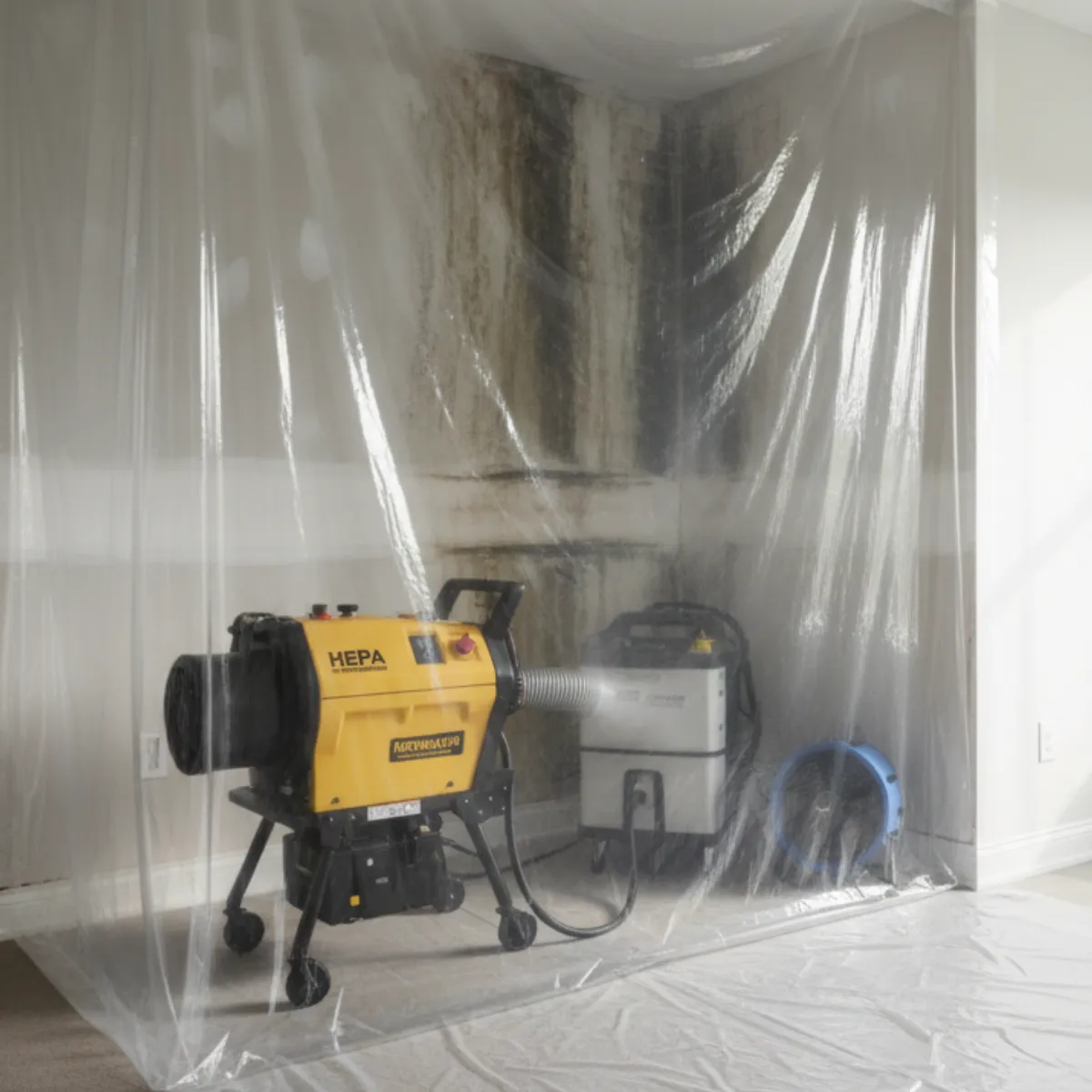
Containment of the Area
To prevent mold spores from spreading:
Plastic barriers are installed
Negative air pressure systems are used
Doors and vents are sealed
Containment is essential to ensure safe mold and mildew removal without contaminating other areas.
Air Filtration
High-efficiency particulate air (HEPA) filters are used to clean the air by capturing mold spores and particles. This step improves indoor air quality and protects occupants during the remediation process.
Mold Removal and Cleaning
Contaminated materials may be removed or treated
Surfaces are cleaned with specialized solutions
Antimicrobial treatments are applied
This is the core stage where mold remediation takes place, ensuring that visible and hidden mold is properly handled.
Drying and Dehumidification
All moisture is removed using:
Industrial fans
Dehumidifiers
Air movers
Without proper drying, mold will return. This step ensures long-term success of the remediation process.
Repair and Restoration
After cleaning:
Damaged drywall, wood, or flooring is repaired or replaced
The property is restored to its original condition
This stage completes the mold damage restoration process and brings your space back to a safe condition.
Causes of Mold and Mildew Growth
Understanding the causes helps prevent future problems. Mold and mildew grow when moisture is present.
Common causes include:
Water leaks from pipes or roofs
Flooding or water damage
High humidity levels
Poor ventilation
Condensation buildup
Damp basements or crawl spaces
Even a small leak can create the perfect environment for mold growth, which may eventually require professional mold remediation.
Why Mold & Mildew Remediation Matters
Health Risks
Mold exposure can cause serious health problems, especially for vulnerable individuals.
Common symptoms include:
Sneezing and coughing
Eye and skin irritation
Breathing problems
Asthma attacks
Chronic sinus issues
Long-term exposure can worsen respiratory conditions. This is why timely mold remediation is critical for maintaining a healthy indoor environment.
Property Damage
Mold can slowly damage structural components of a home:
Weakening walls and ceilings
Rotting wooden structures
Damaging insulation and flooring
Causing paint and wallpaper to peel
Ignoring mold can lead to severe structural issues, making mold remediation essential for property protection.
Financial Impact
Failing to address mold early can result in:
Higher repair costs
Increased restoration expenses
Lower property value
Difficulty in selling or renting
Signs You Need Mold Remediation
Recognizing early warning signs can save time and money.
Look for:
Musty or damp odors
Visible dark patches
Water stains on surfaces
Peeling paint or wallpaper
Allergy symptoms indoors
Persistent humidity
These signs indicate that professional mold remediation services may be needed.
DIY vs Professional Mold Remediation
When DIY Is Enough
You can manage minor issues if:
The affected area is small
Mold is only on the surface
There are no health symptoms
Basic cleaning may work, but it does not replace full remediation.
When to Call Professionals
You should hire experts when:
Mold covers a large area
It is hidden behind walls
There has been flooding
Health issues are increasing
Professionals ensure safe and effective mold and mildew removal.
Benefits of Hiring Experts
Proper safety equipment
Advanced tools and techniques
Complete removal of mold
Prevention of future growth
Faster results
How to Prevent Mold and Mildew
Prevention is the best approach.
Follow these tips:
Fix leaks immediately
Maintain humidity below 50%
Use exhaust fans
Improve ventilation
Dry wet areas quickly
Use dehumidifiers
Inspect your home regularly
Preventive measures reduce the need for frequent mold remediation.
FAQs
Is mold always dangerous?
Not all mold is toxic, but all mold should be removed to avoid health and structural risks.
Can mold return after removal?
Yes, if moisture issues are not fixed. Proper mold remediation includes prevention.
How long does remediation take?
It can take 1–7 days, depending on severity.
Does paint remove mold?
No, paint only hides it temporarily. Proper treatment is required.
Conclusion
Mold and mildew may seem minor at first, but they can quickly grow into serious problems that affect both health and property. Proper mold remediation is essential to remove harmful growth and stop it from returning.
By understanding the causes, recognizing early signs, and taking timely action, you can protect your home and your family. Whether it is a small issue or a large infestation, addressing it with the right approach ensures a clean, safe, and healthy living environment.
Protect your home and health with expert mold remediation from PDRS. Act now to stop damage, remove harmful mold, and restore your space to a clean, safe condition.