What to Do After a Sewage Backup or Overflow in Your Property
What to Do After a Sewage Backup or Overflow in Your Property
Imagine walking into your home or business and being hit with a strong, unpleasant odor, only to realize sewage water has backed up into your space. This situation is far more than an inconvenience. It creates an immediate health risk and can quickly damage your property if not handled correctly. In these situations, fast and professional sewage backup cleanup is essential.
Sewage backups carry harmful contaminants such as bacteria, viruses, and toxic waste. Within hours, these contaminants can spread across floors, seep into walls, and affect indoor air quality. Acting quickly not only protects your health but also reduces repair costs and prevents long-term structural damage. A proper sewage backup cleanup plan ensures every stage, from removal to restoration, is handled safely.
This detailed guide explains what steps to take after a sewage backup or overflow so you can respond quickly and confidently.
Understanding the Risks of Sewage Backup
Sewage water, often called black water, is the most dangerous type of water intrusion. It is heavily contaminated and unsafe to handle without proper protection.
It may contain:
Disease-causing bacteria such as E. coli and Salmonella
Viruses and parasites that spread infections
Industrial waste, chemicals, and toxins
Exposure can lead to serious health issues, including stomach infections, skin irritation, breathing problems, and allergic reactions. In severe cases, untreated exposure can result in long-term illness.
Beyond health risks, sewage water can destroy materials it touches. Flooring, drywall, wooden structures, and insulation can absorb contaminated water, leading to weakening, warping, and decay. Immediate sewage contamination cleanup is necessary to stop this damage from spreading.
Step 1 – Ensure Safety First
Your first priority is safety.
Evacuate the affected area immediately
Avoid any skin contact with sewage water
Turn off the electricity if water is near outlets or appliances
Open windows if possible to improve ventilation
Wear gloves, boots, and masks if entry is unavoidable
Keep children and pets far away from the contaminated zone
Even a small amount of exposure can be harmful. Limiting contact until professionals begin sewage backup cleanup is critical.
Step 2 – Stop the Source of the Problem
Stopping the source prevents further contamination and limits the scale of damage.
Common causes include:
Blocked sewer lines from grease, debris, or foreign objects
Tree roots breaking into underground pipes
Cracked or collapsed plumbing lines
Heavy rain is overwhelming drainage systems
Immediate actions:
Shut off the main water supply
Stop using all plumbing fixtures
Contact a plumber to inspect and fix the issue
No cleanup process should begin until the source is controlled. This ensures that sewer backup cleaning efforts are effective and not wasted.
Step 3 – Call a Professional Restoration Company
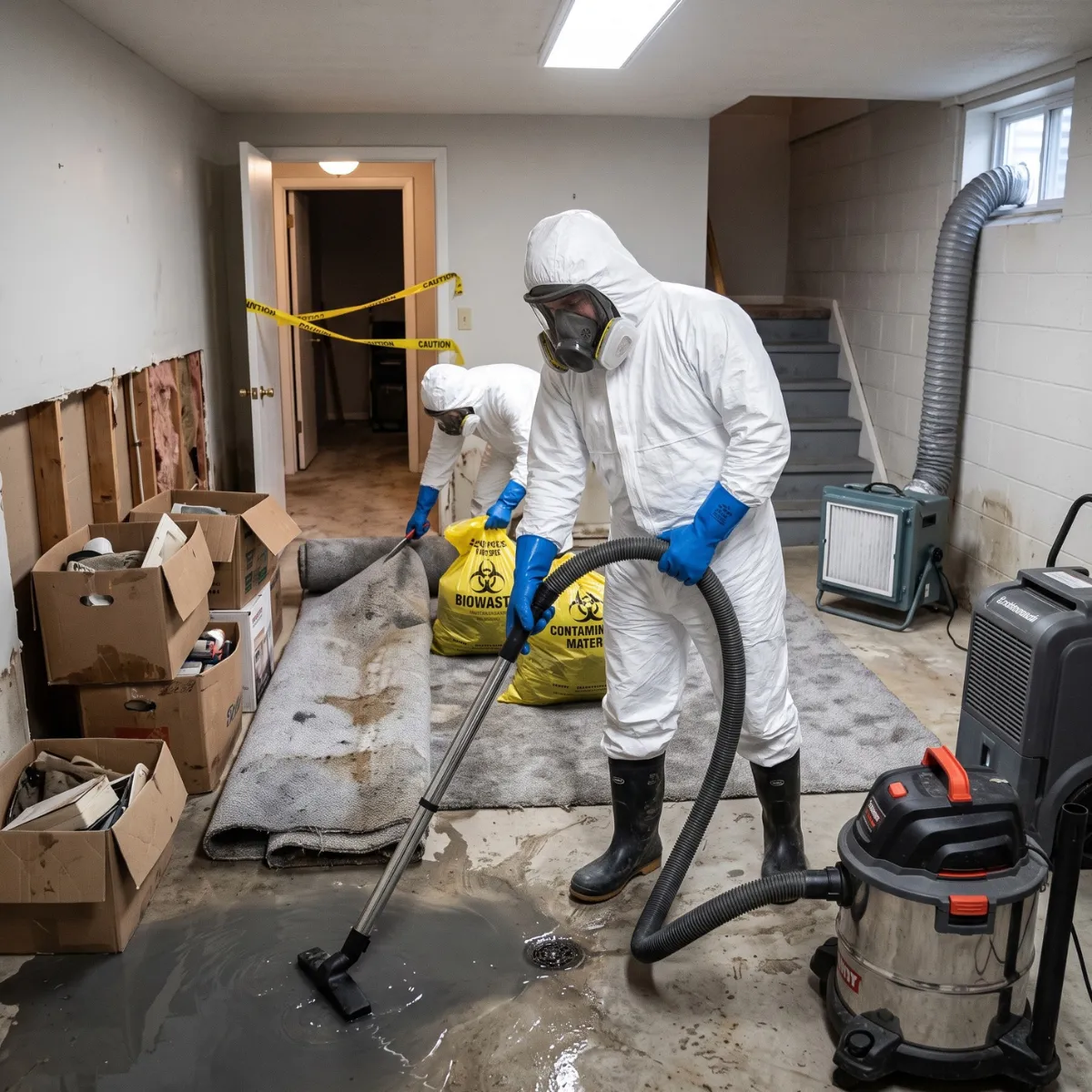
Sewage cleanup is hazardous and requires trained professionals. It is not comparable to regular water damage.
A professional team will:
Arrive quickly with emergency sewage cleanup services
Assess contamination levels and affected areas
Use powerful extraction equipment
Follow safety and environmental regulations
Fully sanitize and deodorize the space
Trying to handle sewage backup cleanup without proper tools can leave behind bacteria, moisture, and odors that continue to cause problems later.
Step 4 – Document the Damage for Insurance
Proper documentation helps you recover financial losses.
Take detailed photos and videos of all affected areas
Capture damage to walls, floors, furniture, and belongings
List all items that are damaged or destroyed
Keep receipts for temporary repairs or expenses
Contact your insurance provider immediately
This documentation should be completed before major sewage backup cleanup work begins, ensuring you have accurate records for your claim.
Step 5 – Remove Contaminated Water and Waste
The next stage involves removing all sewage water and debris.
This process includes:
Pumping out standing water using industrial equipment
Removing sludge, waste, and solid contaminants
Separating salvageable and non-salvageable items
Porous materials like carpets, rugs, mattresses, and upholstered furniture often absorb contamination deeply and usually must be discarded. Proper sewage overflow cleanup ensures that all hazardous materials are safely removed and disposed of according to regulations.
Step 6 – Deep Cleaning and Disinfection
Once visible waste is removed, thorough cleaning begins.
Professionals use:
Hospital-grade disinfectants
Antibacterial and antimicrobial solutions
Specialized scrubbing and surface treatments
Every surface must be treated, including:
Floors and baseboards
Walls and ceilings
Hidden areas behind drywall or under flooring
Detailed sewage backup cleanup at this stage ensures bacteria, viruses, and odors are fully eliminated.
Step 7 – Drying and Dehumidification
Even after cleaning, moisture can remain trapped in building materials.
Drying includes:
High-speed air movers to circulate air
Industrial dehumidifiers to remove moisture
Moisture meters to detect hidden dampness
Without proper drying, moisture can lead to mold growth, structural damage, and unpleasant odors. Complete sewage backup cleanup always includes advanced drying techniques to ensure the space is fully moisture-free.
Step 8 – Mold Prevention and Inspection
Mold growth can begin within 24 to 48 hours after water exposure.
Common signs include:
Persistent musty smells
Dark spots or patches on surfaces
Increased allergy or respiratory symptoms
Professionals may:
Conduct mold inspections
Apply preventative antimicrobial treatments
Remove early mold growth if detected
Mold prevention is a critical part of sewage backup cleanup to protect long-term indoor air quality.
Step 9 – Restore and Repair Your Property
After cleaning and drying, restoration work begins to return your property to normal.
This can include:
Replacing drywall, insulation, and damaged materials
Installing new flooring or repairing existing surfaces
Painting and refinishing walls
Performing odor removal treatments
The final stage of sewage backup cleanup ensures your home or business is safe, clean, and fully restored.
Common Causes of Sewage Backups
Knowing what causes backups can help prevent them in the future.
Grease, hair, and debris clog pipes
Flushing wipes, diapers, or hygiene products
Tree roots are damaging sewer lines
Old or poorly maintained plumbing systems
Heavy rainfall or flooding
Regular maintenance can greatly reduce the chances of needing sewage backup cleanup again.
How to Prevent Future Sewage Backups
Preventive steps can save time, money, and stress.
Schedule regular plumbing inspections
Avoid flushing non-degradable items
Dispose of grease in containers, not drains
Install backwater valves to stop reverse flow
Clean and maintain sewer lines periodically
These steps reduce the risk of emergencies and the need for extensive sewage backup cleanup services.
When to Call Emergency Services
Call professionals immediately if:
Sewage water continues to rise or spread
Strong odors make the area unsafe
Large portions of your property are affected
You notice early signs of mold
Fast action with expert sewage backup cleanup minimizes damage and speeds up recovery.
Why Professional Sewage Cleanup Matters
Professional services provide:
Safe handling of hazardous waste
Complete sanitation and odor removal
Advanced equipment for faster results
Reduced risk of future damage
Reliable sewage backup cleanup ensures your property is not only clean but also safe for occupancy.
Conclusion
A sewage backup or overflow is a serious emergency that requires immediate attention. Acting quickly, following proper steps, and relying on professional help can make a significant difference in protecting your health and property.
With expert sewage backup cleanup, you can restore your space efficiently and prevent long-term complications.
If you’re dealing with a sewage backup or overflow, don’t wait for the damage to get worse. Contact Property Damage Restoration Services (PDRS) for fast, reliable sewage backup cleanup. Our team is available 24/7 to restore your property safely and quickly.