Mold Testing vs Remediation: What's the Difference?
Mold Testing vs Mold Remediation: What's the Difference and Do You Need Both?
Imagine noticing a musty smell in your home or a small dark patch forming on a wall, and wondering whether you need to test for mold, remove it, or both. This confusion is common, and it often delays action, allowing a small problem to spread into something far more serious. Mold testing and mold remediation serve two different purposes, and understanding how they work together can help homeowners respond correctly and avoid unnecessary costs or risks.
Beyond simply identifying mold, knowing when testing is necessary and when remediation should begin can save time, protect your health, and prevent further property damage. This guide breaks down the difference between mold testing services and mold remediation services, and explains when each one is the right step.
Understanding Mold Testing Services
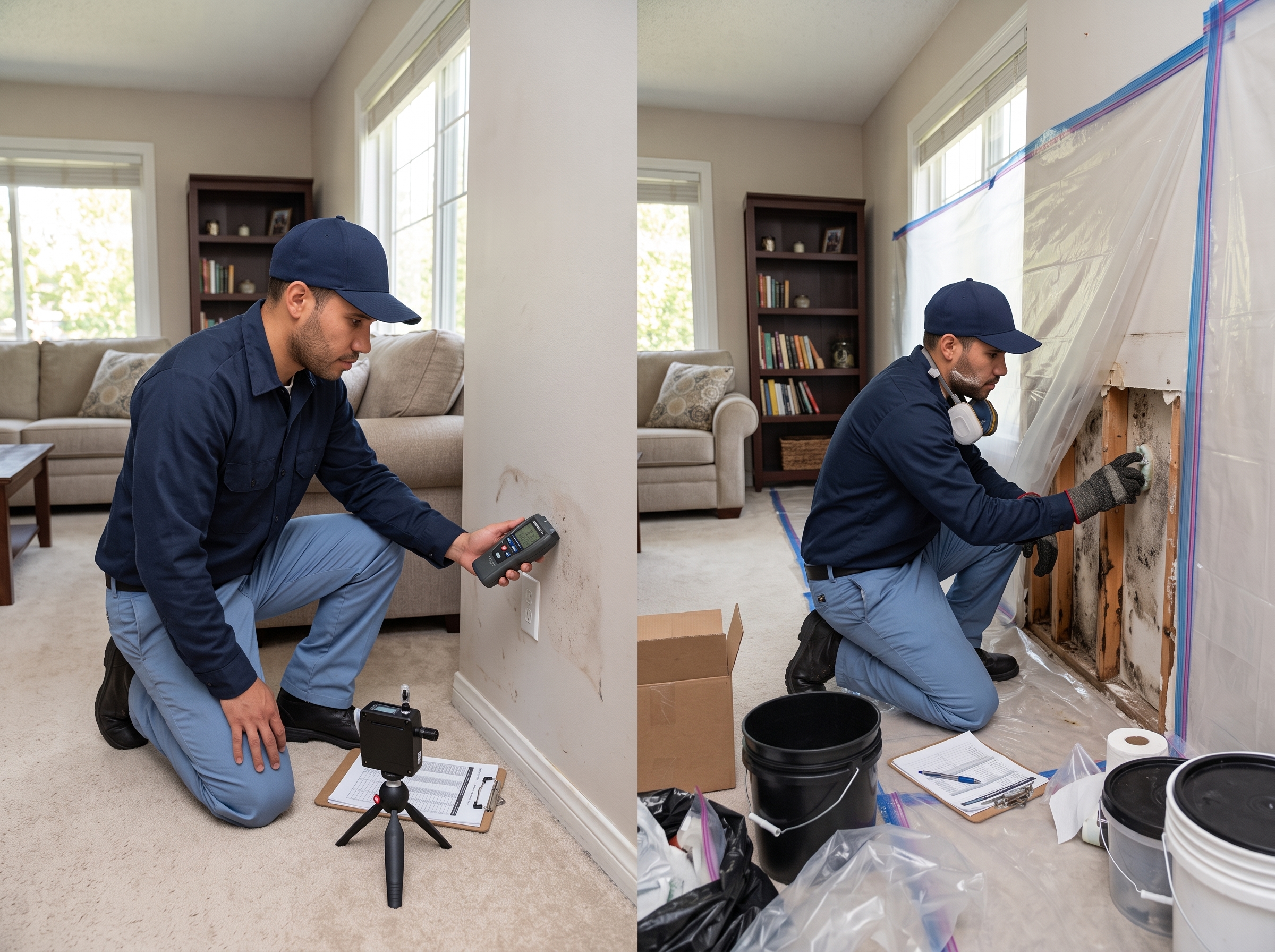
Mold testing is the process of identifying whether mold is present in a property, what type it is, and how extensive the contamination may be. It typically involves air sampling, surface sampling, or both, allowing specialists to determine spore levels and locate hidden growth that isn't visible to the eye.
Professional mold testing is especially useful when:
A musty odor is present but no visible mold can be found
A property is being bought or sold and buyers want verification
Past water damage has occurred and hidden mold is suspected
Residents are experiencing unexplained allergy or respiratory symptoms
Confirmation is needed after remediation to verify the work was successful
Not every situation requires testing. If mold is clearly visible and limited in size, many professionals move straight into remediation rather than spending time and money confirming what is already obvious.
Understanding Mold Remediation Services
Mold remediation is the actual process of removing mold and addressing the conditions that allowed it to grow. Rather than simply identifying a problem, remediation solves it through containment, removal, cleaning, and prevention.
A typical mold remediation process includes:
Containing the affected area to prevent spores from spreading
Removing mold-damaged materials that cannot be safely cleaned
Cleaning and sanitizing surfaces with specialized antimicrobial treatments
Drying and dehumidifying the space to eliminate the moisture source
Applying protective coatings to help prevent future mold growth
Mold remediation is necessary any time mold is confirmed, regardless of whether it was found through testing or visible inspection.
Mold Testing vs Mold Remediation: Key Differences
The confusion between mold testing vs mold remediation often comes down to purpose. Testing identifies and measures a problem, while remediation solves it.
Mold Testing | Mold Remediation |
Confirms presence and type of mold | Physically removes mold |
Measures spore levels in air or on surfaces | Cleans and sanitizes affected materials |
Often used before or after remediation | Addresses the moisture source |
Does not remove mold | Restores the area to a safe condition |
In short, mold inspection vs remediation isn't an either-or decision in most cases — testing often supports and confirms the remediation process rather than replacing it.
Mold Removal vs Remediation: Why Wording Matters
Many homeowners search for mold removal vs remediation, assuming the terms mean different things. In practice, "mold removal" usually refers to physically eliminating visible mold, while "mold remediation" is the broader, more thorough process that includes removal, cleaning, drying, and prevention. Choosing a provider who performs full remediation rather than surface-level removal helps ensure the problem doesn't return.
Do You Need Both Mold Testing and Remediation?
In many situations, mold testing and remediation work together rather than being separate choices.
When Testing Comes First If mold is suspected but not visible, professional mold testing helps confirm its presence and locate the source before remediation begins.
When Remediation Comes First If mold is clearly visible and limited in scope, remediation can often begin immediately without testing beforehand.
When Testing Comes After Many professionals recommend post-remediation testing to confirm that spore levels have returned to normal and the remediation was successful.
Combining mold remediation and testing in this way provides the most reliable results, giving homeowners confidence that the problem has been fully resolved.
Why Professional Mold Testing and Remediation Services Matter
Attempting to handle suspected mold without professional guidance often leads to incomplete removal, disturbed spores spreading to new areas, or a problem being treated as solved when it isn't. Professional mold testing services use proper sampling methods and lab analysis, while professional mold remediation services follow structured containment and cleaning procedures designed to fully resolve contamination.
Our mold and mildew remediation team combines both services when needed, ensuring that any mold concern is accurately identified and completely addressed rather than just masked.
For a closer look at the full remediation process, read our guide on mold remediation and how to protect your home fast.
Conclusion
Mold testing and mold remediation serve different but often complementary roles. Testing identifies and measures a mold problem, while remediation physically removes it and addresses the underlying cause. In many cases, the best results come from combining both — testing to confirm, remediation to resolve, and testing again to verify. Knowing which step your situation calls for can save time, money, and protect your family's health.
Not sure whether you need mold testing, remediation, or both? Contact Property Damage Restoration Services today for a professional assessment. Our experienced team is available 24/7 to help identify and resolve mold issues safely.
FAQs
1. Is mold testing necessary before remediation? Not always. If mold is clearly visible and limited in size, remediation can often begin without testing. Testing is more useful when mold is suspected but not visible.
2. What's the difference between mold removal and mold remediation? Mold removal typically refers to physically eliminating visible mold, while mold remediation is a broader process that includes removal, cleaning, drying, and preventing future growth.
3. How much does mold testing cost? Costs vary depending on the size of the property and number of samples needed, but testing is generally a smaller investment compared to full remediation.
4. Can I skip testing and go straight to remediation? In many cases, yes — especially when mold is visibly confirmed. However, testing after remediation is often recommended to verify the work was successful.